Monday, July 14, 2008

Crisis Surrounding Fannie Mae and Freddie Mac

Last Year afte the exposure of US financial crisis, while everyone were talking about this bank and that financial companies, I was asking around the impact on Gennie Mae and Fannie Mae. I know of these great mortage issuers in my study, although I don't really understand the detail. And especially the Gennie Mae, which is gauranteed by full faith and credit of the US Government, what if it also suffers huge losses?
.
I was asking some of my friends who are in the financial sector, none got the answer. Well, that's because we are not knowledgeable enough. But now, it seems that my worries are not unfound.
.
========================
Business Times - 14 Jul 2008

Collapse of US mortgage bank piles on jitters for markets
(An excerpt)

By ANDREW MARKS
NEW YORK CORRESPONDENT

IT looks like even Wall Street's usually unflappable equities traders may have become unnerved.

But who can blame them after the week that they have been through. There was a run on and near melt-down of mortgage giants Fannie Mae and Freddie Mac, new record highs for oil prices, and most shocking of all, the collapse of IndyMac Bancorp, a mortgage bank based in California.

On Friday, US banking regulators took control of the assets of IndyMac after a run on the bank by panicked depositors forced it to the wall, precipitating one of the biggest bank failures in US history.

IndyMac, which is due to reopen today under federal supervision, specialised in mortgages that often required minimal documents from borrowers. It is the fifth US bank to fail this year as a housing slump and credit crunch strain the financial system.

'It's very difficult to remain calm and reasoned when you get into this cycle of constant shocks to the system, of getting hit in the gut with just how bad the credit market is just when you start thinking that maybe the worst is over,' says Mark Nolan, an equity trader and sales analyst at Garvin & Company, in a reference to the crisis at Fannie Mae and Freddie Mac. 'The sense of doom people are sunk in right now makes me think back to my high-school Shakespeare: 'These are the times that try men's souls.' It makes it tough to go to work in the morning,' he says.

Indeed, the huge losses at Fannie Mae and Freddie Mac - the nation's two largest mortgage issuers responsible for a combined US$6 trillion of mortgages - have sparked fears of an outright government takeover. Such a move would protect the mortgages, but would wipe out shareholder equity. Thus the massive sell-off on the two companies, which both saw their share prices plunge by more than 75 per cent in three days.

Saturday, June 21, 2008

US Is Still World Largest Economy

There is a good article in Business Times last week. I had frequently shared my opinion on global economy, particularly US and China with personal friends. The common question that people usually asked are projection on US economy and strength of China’s economy.

Make no mistake. I’m not an economist although I studied economy during my previous study and read financial news (almost) daily. But I’m still not an economic consultant. However, with basic economic knowledge, commonsense and reading of analysts’ report, I’m able to draw reasonably accurate conclusion. My ACCA lecturer Mr Fred Keer used to say “commonsense is the least common human attributes”. He is an extraordinary lecturer. I think he is back to UK.

My projection for US economy remains the same. Besides sub-prime issue, which was recently removed from the centrestage, inflation and skyrocketed oil price may soon lead US into a recession. So it is very uncertain now and stock market should be avoided at all costs. As for the China market, even if we add in India’s market, both of them still cannot replace our export to US and Europe. Not to forget that China herself is also a net exporter to US. This means that she will also be hit should there be a downturn in US economy. If China is affected, certain their demand for Singapore product/services will drop. I think that’s pretty commonsense. Don’t need an MBA to understand this.

There is an article on Business Times that concurs with my analysis, or the other way round.

==============================

Growth in China, India can't offset US downturn

Advanced countries' weakness will hit growth in emerging markets: Fitch

By CONRAD TAN

(SINGAPORE) Emerging economies such as China and India are not big enough to offset a likely recession in the US and weakening growth in other advanced economies, the head of Asia-Pacific sovereign ratings at Fitch Ratings warned yesterday.

Since most developing economies are net exporters to the US and Europe, continued growth in emerging economies will not provide support for the developed economies that are still the dominant sources of world demand, said James McCormack, who is responsible for analysis and ratings of sovereigns in Asia.

While Fitch expects growth in emerging markets to continue to outpace that of developed economies, 'the fact that China and India are growing quickly doesn't mean the US is going to grow any faster', he said. 'It's not really going to help offset weakness in advanced economies. The trade flows suggest quite the opposite.'

Mr McCormack, who is usually based in Hong Kong, was speaking at a structured finance conference in Singapore organised by Fitch.

India accounted for just 2 per cent of global economic output last year as measured by gross domestic product at market exchange rates, according to the International Monetary Fund's April World Economic Outlook.

'And it's not a very open economy - imports are only 13 per cent of its GDP. So it doesn't really matter how fast India grows - it is not going to contribute to stronger growth in other markets,' said Mr McCormack. 'It doesn't import that much and it's just too small.'

China's contribution was six times larger, at 6 per cent of world GDP in 2007, he said. 'And it's a much more open economy as well.' Imports accounted for more than a quarter of China's GDP last year at market exchange rates, so faster growth in China should benefit those economies it imports from.

'But China is running very large trade surpluses with the US and the European Union. And that would suggest that China is a net supplier to those markets - it doesn't really demand very much from the US and the EU,' said Mr McCormack.

Collectively, the four so-called BRIC countries - Brazil, Russia, India and China - are running trade surpluses with the US and EU to the tune of more than US$500 billion, he said. 'What that tells us is that the trade flows are going from exports from the emerging markets to the advanced economies.

'So if there's weakness in the advanced economies, you're going to see weakness in the emerging markets. It's not the other way around, where you see strength in the emerging markets followed by strength in the advanced economies.'

If purchasing-power- parity exchange rates - the amount of currency needed to buy the same common basket of goods and services as one US dollar - are used rather than market exchange rates to measure GDP, China's share of world output in 2007 jumps to 10.8 per cent, while India's rises to 4.6 per cent.

But even by this revised measure, the 23 developing economies in Asia - excluding Japan, Hong Kong, Singapore and Taiwan - account for just 20.1 per cent of world output, less than the 21.4 per cent contributed by the US alone, according to the IMF report.

The UK and the 15 euro-area countries make up another 19.4 per cent of the world economy, while Japan accounts for 6.6 per cent of the total.

Friday, June 20, 2008

You Seen This Before?


Modern Management Theory: Lesson 6

A little bird was flying south for the winter. It was so cold the bird froze and fell to the ground into a large field.

While he was lying there, a cow came by and dropped some dung on him.

As the frozen bird lay there in the pile of cow dung, he began to realize how warm he was.

The dung was actually thawing him out!

He lay there all warm and happy, and soon began to sing for joy.

A passing cat heard the bird singing and came to investigate.

Following the sound, the cat discovered the bird under the pile of cow dung, and promptly dug him out and ate him.

Morals of the story:

(1) Not everyone who shits on you is your enemy.

(2) Not everyone who gets you out of shit is your friend.

(3) And when you're in deep shit, it's best to keep your mouth shut!


THUS ENDS THE MANAGEMENT COURSE

Wednesday, June 18, 2008

Modern Management Theory: Lesson 5

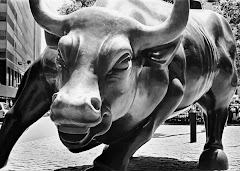
A turkey was chatting with a bull.

'I would love to be able to get to the top of that tree' sighed the turkey, 'but I haven't got the energy.'

'Well, why don't you nibble on some of my droppings?' replied the bull. They're packed with nutrients.'

The turkey pecked at a lump of dung, and found it actually gave him enough strength to reach the lowest branch of the tree.

The next day, after eating some more dung, he reached the second branch.

Finally after a fourth night, the turkey was proudly perched at the top of the tree.

He was promptly spotted by a farmer, who shot him out of the tree.

Moral of the story:

Bull Shit might get you to the top, but it won't keep you there.

Tuesday, June 17, 2008

Modern Management Theory: Lesson 4

An eagle was sitting on a tree resting, doing nothing.

A small rabbit saw the eagle and asked him, 'Can I also sit like you and do nothing?'

The eagle answered: 'Sure, why not.'

So, the rabbit sat on the ground below the eagle and rested. All of a sudden, a fox appeared, jumped on the rabbit and ate it.

Moral of the story:

To be sitting and doing nothing, you must be sitting very, very high up.

2009 F1 Singtel Singapore Grand Prix - 27 Sep

Life at NUS-CMC, and still happening......

Visit www.moblyng.com to make your own!