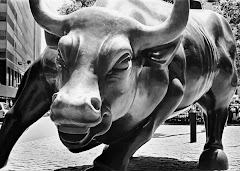
Tuesday, November 6, 2007

Speculation - Are You An Expert?

I missed an interesting article in Business Times (1 Nov 2007). I noticed that article and after reading it, I find it a very good article to bring reality to the naïve. All my friends who had sought my advice or had learnt investment from me know my very first rule – I never gamble. It’s not that I never but after I understand the truth from warren Buffett, I strongly protest against stock speculation. No doubt occasionally, I still buy lottery but it is a mere $15 per bet for $1 million and that’s it. There is no repercussion and my maximum lost is a fixed $15 (about 2 x MacDonald meals).

Recently one of my friends called me up and asked me questions on trading. What happened was I recommended him to buy China Sunshine Chemical and then when there was alight movement in the price, his colleague advised him to contra off and locked in profit. Then he can buy back at cheap price again and do the same thing again. I replied that I know what game his colleague is playing, but I am not interested. I told him that if he speculates, he is on his own and I will not assist him in any way. He has to make a choice. No doubt that recent poor market sentiment has caused many stock prices to retreat, but my comment/principal will never change. In fact, I also have friends who tried to invent some methods to correlate it with the stock market, i.e. a secret to success. May we can also use the tide to predict stock market, or the temperature at noon, or the number of adverts on the obituary. All these voodoo tricks, I am not interested.

I like to specially highlight a para in the article. It is something I always warn opportunists or people who try to find luck in stock market, that ANYTHING can happen.

“….There's always a first time for everything, even a default of 'safe' government bonds.”


=====================================
Business Times - 01 Nov 2007

Even the experts can get it so badly wrong

History is replete with heavy trading losses that were all too easily incurred

By LARRY WEE
SENIOR CORRESPONDENT

Within less than a fortnight, two Singapore shipbuilders have announced massive currency trading losses. How and why these losses were incurred will surface only after investigations have been conducted.

However, history is replete with financial case studies of how heavy trading losses can be all too easily be incurred by individuals or corporations. In early 1995, we discovered that Barings trader Nick Leeson had blown a US$1.4 billion hole trading in financial futures on Simex here in Singapore. Three years later, in 1998, veteran traders and Nobel prize winners at the US-based Long Term Capital Management (LTCM) suffered losses of more than US$3 billion in the short space of nine months because of heavily leveraged trades. In 2004, China Aviation Oil blew more than half a billion US dollars on oil derivatives trading.

And just this week, we have discovered that even blue-chip investment banking giants like Merrill Lynch and UBS are continuing to report multi-billion dollar losses from complex mortgage-related debt portfolios that have become nigh impossible to unravel.

How do such trading losses - and we stress we are not talking about SembMarine and Labroy here - pile up? Here are some clues to consider.

Leverage is a two-edged sword. Making bets based on only a fraction of the underlying sums transacted is attractive because profits are correspondingly magnified - but then so are the losses. In the case of blue-chip US hedge fund LTCM, their convergence trades were basically bets that too-large price differentials between different types of bonds should become smaller over time - something which they backed with state-of-the-art trading models which studied historical price movements.

Between 1994 and 1998, LTCM reportedly leveraged US$5 billion in client capital into US$125 billion worth of borrowings, and outstanding swap positions worth more than US$1 trillion in nominal value.

Murphy's Law. 'Anything that can go wrong, will - at the worst possible moment.' In the case of LTCM, the fallout from the Russian debt default of August 1998 shrank their capital from more than US$4 billion at the start of 1998 to just US$600 million by September that same year.

Nick Leeson had to throw in the towel when already bad losses on his large Nikkei futures contracts skyrocketed following a massive earthquake in Japan in January 1995 and forced the Japanese stock market into free-fall.

This time around, one fear which refuses to go away out there is that the sub-prime debt crisis could spiral further out of control - forcing another panicky flight to quality.

Double or nothing usually means you end up with nothing. Every veteran trader knows that he must squeeze the most money out of his good bets but keep loss limits tight on those that go awry.

But human nature often finds people cashing in too quickly on the good stuff but massaging losses for far too long - in the hope that they will come right someday, somehow. In the case of Barings and China Aviation, history tells us that record-sized positions - and therefore record losses - were accumulated because of a desperate effort to average down the cost of what was to become awfully wrong (and highly leveraged) bets about the direction of the Nikkei and oil prices respectively.

Here's a simple example. Let's say that about one year ago, your banker persuaded you to buy US$100,000 at S$1.60 because it could enhance the yield on your fixed deposit by at least 2 per cent. Then, as the US dollar fell, he encouraged you to buy more to average down your cost. Let's say that you bought another US$100,000 at S$1.55 and again at S$1.50.

By July 2007, you own US$300,000 at an average of S$1.55. In August this year, the US dollar rebounded to S$1.54. Had you sold out then, you would have reduced your total currency loss to S$3,000 - which is more than offset by the extra US$6,000 in interest earnings from your US$300,000 deposit.

If however, you had chosen to hold on until now - hoping for an even stronger US dollar rebound - the currency losses would have swelled to S$30,000 as the US dollar has now fallen to S$1.45.

Admission is free, you pay to get out. As banks from Goldman Sachs to UBS have found out to their detriment, it is all too easy to find rocket scientists who will happily structure complicated financial products - whether based on derivatives or housing loans - which offer superior yields. And the longer the tenure, the more you stand to make.

But here's the problem. When you discover, as they have, that nobody is willing to fund those fancy CDO (collateralised debt obligation) structures, or buy them back from you when you need to sell them, then you are also stuck with losses for a nerve-wrackingly long time. Worse, the structure can be so complicated that you are not even sure how much they are worth at a given point in time, or how to unravel them without paying a hefty penalty.

Illiquid can too quickly become insolvent. Buying an asset at tempting yields is all too easy. But any corporate treasurer worth his salt will also want to find out how easily he can dispose of the asset. LTCM could not find any buyers for their less than desirable bonds when Russia's declared moratorium on US$13.5 billion of its Treasury issues caused a nervous flight to quality in fixed income markets.

The other important lesson from LTCM to take home here is that historical evidence must be taken with a pinch of salt. There's always a first time for everything, even a default of 'safe' government bonds.

It is not known whether some of these problems, so painfully experienced elsewhere, also touched SembCorp Marine and Labroy Marine. But these firms' shareholders will want to know how they could have allowed themselves to get so deeply embroiled in foreign exchange speculation when their core business is the building of oil rigs.

Monday, November 5, 2007

Investment Strategy - Surviving The Economic Downturn (Final)

In Part I of this topic, I mentioned that generally, investment in bonds should come with capital protection. This is because in any worst-case scenario, you will get back your capital at par value. But company can fold up especially in bad times. If you invest in a bond directly, you will know its characteristics including risk. But if you buy bond funds, you got to be careful. The fund brochure may use big words such as “secure”, “capital protection” etc. But you should really read the fine print usually right at the bottom. It will say something like “the fund may incur losses if any borrower defaulted or “capital protection is only guaranteed assuming no default” etc. The reason is because fund manager may buy corporate bonds which come with higher risk. And if one of the companies default on its obligation, your bond fund will suffer and the price will fall. Of course if the bond fund's policy statement clearly states that the fund only invest in “AAA” investment grade bonds (especially government bonds), then the comfort of “capital protection” will be much higher.

So what will happen if a company (the borrower) defaulted or fold up? If the company defaulted, the trustee will demand the money back immediately. This may cause the bank and all other borrowers to do the same so as to protect their interest. Then the company’s fate may become a self-fulfilled prophecy due to cashflow problems.

What if the company fold up? The good news is that bondholders are the first “claimer” when the company liquidates. The company’s remaining assets will be sold off, cash realised will be use to pay back the bank and bondholders first. These lenders are on top of the list.

So Is That All?

Unfortunately, no! So we know that the best time to buy bond is when interest rate is high, when the business cycle is around the peak, when there are enough evidence to believe that the bull run is unsustainable. The biggest problem is – how do you define “high”? How do you know if a downturn is coming? How do you know that US will ignite a recession in 2008? Didn’t George Soros predicts a recession this year? How about asking the economists? Well, if the economists is that good, how come he/she is still earning employment income? By the way, I thought only God knows the future? Imagine if I followed some analysts’ prediction and dispose off all my shares last year, I’ll be crying now. This year, global stock markets are bullish setting one record after another even in the midst of rising oil price and US subprime woes. If you ask if I have any clue, I have no clue. Yes, the best thing anyone including any expert can do is only to analyse, assess and to come up with his/her BEST GUESS.

My recommendation is this:

1) Do your homework, make your best guess. Nobody knows who is correct. People only comment on the result. When a decision is proven to be wrong, then everyone will start saying that “you should do this or that because of this and that”! It’s human.

2) If you want to shun away from volatile equity market especially if you seriously believe that the bull is coming to an end, start switching to fixed income instrument. You may not need to do it instantly like disposing all your shares in a day. You can do it gradually by reducing your equity portfolio's size.

3) If you want to invest in fixed income instrument, avoid one with currency risk. And buy investment-grade local bonds (or bond funds).

4) If you buy SGS, you can either buy the existing ones or newly-issued bonds. Personally, I will advise you not to select bonds with very long maturity period such as ten years. Find one that is you are comfortable with the yield and maturity period, say three or five years. If you don’t want to go through this pain, then pay for a fund manager.

5) Assuming that your analysis is correct, you had protected your loots. You shall wait for the dust to settle. When that day comes, i.e. business cycle on recovery again, if your bonds expired, you will get back your capital. Otherwise you can sell it in the open market and get your capital gain. You have huge amount of cash and is ready for another upswing of the business cycle. And the story continues.

Conclusion

So here we come to an end on my sharing of long-term winning strategy in good times and in bad times. Lastly, in case you’ve forgotten the ultimate objective of all these efforts in investment, I need to remain you again. The ultimate objective is not to buy a bigger house or car. Buying bigger car is one “xxxxx” things to do. No offence to anyone but if you read books from successful investment gurus or wealth creation experts, you will know what I mean. Early gratification is unwise. The ultimate objective is for comfortable retirement or even early retirement (as in the case of Robert Kiyosaki) where you never worry about sufficient savings till the day you meet your Maker; where you can continue with the lifestyle you used to have with your wife. If we can survive through a few business cycles successfully, this will not be just a dream.

Sunday, November 4, 2007

Investment Strategy - Surviving The Economic Downturn (Part III)

Determination Of Bond Price

Before we continue, if you just want to buy bond, you can skip this session. You don’t really need to know how bond price is determined especially if you buy bond fund. The fund manager is paid to get some brain cells killed. But if you like to know more, then this session is important. Everyone knows how the price of a stock is determined – supply and demand. But for bond, it is not by supply and demand. It is purely mathematical. Firstly, for newly issued bonds, every unit will be priced at $1,000. Note that price of bonds are quote based on par value of $100. This is different from equity fund; just accept it. After a bond is issued, the price will change. To know how we determine existing bond’s price, let’s go through the elements that will affect bond price:

- Time (or maturity period)
- Coupon rate
- Future value (par value at redemption)
- Current interest rate or yield

I won’t go through the definition again. If you look at these elements carefully, you will realised that only the yield will change from time to time. The maturity period (or the remaining life), the coupon rate and future value cannot change. Therefore, only yield will change thus directly affecting the price. Or only the price can change and it will directly affect the yield. Their fate is intertwined. With a financial calculator (or using a web-based bond calculator), if you increase the yield, the price will fall and vice versa. This is the inverse relationship between bond price and yield (or current interest rate). Like I say, it is purely mathematical. Play around with the calculation and you will understand.

Inverse Relationship Between Market Interest Rate And Bond Price

You MUST remember this by hard even if you don’t understand - the inverse relationship between bond price and market interest rate. When interest rate goes up, bond price fall; when interest rate comes down, bonds price rise. So if the government (e.g. US’s Fred) increase their interest rate, the banks will follow and existing bond price will drop and vice versa. Again this is purely mathematical. No tricks and not by supply and demand. We can prove this easily with a financial calculator. But even without a calculator, we can also understand it with our common sense. Firstly, when the government announce an increase in interest rate, you wouldn’t buy existing bond, i.e. those that are already issued and available in the open market. Why? This is because the new bonds will be issued with comparatively higher coupon rates following the government’s new interest rate direction. Remember that I say the coupon rate of a bond is fixed? Thus you have no incentive to buy existing bonds with comparatively lower coupon rate. As such, these existing bond prices’ will fall and adjusted immediately such that the yield equals to current interest rate, generally speaking. Thereafter, you are indifferent to whether you should buy the newly issued bonds or existing bonds since they all gives you about the same yield. I repeat again – the YIELD should be your ultimate focus.

“Hey, I am an artist; I have no clue what you are talking about!”

Then forget about the above explanation and just remember the relationship by hard! We are going to use this knowledge to set our investment horizon; our strategy. Please take note that I am not talking about timing the market (buy in December and sell in January) but setting investment horizon. Let's say the economy just recovers from recession, interest rates are generally low. In the process of recovery to full-blown bull market, the government will increase the interest rate gradually. Imagine you bought a 10-year bond before economic recovery, say in 2003 and your initial intention was to hold it until maturity. Then you witnessed strong economic recovery and a few interest rate hikes. And everyone is making tonnes of money from equity. You gave up and decided to sell your bond before its maturity but you need to sell at a capital loss.

Let’s see how much you have learnt. My first one million dollar question:

Q. When is the best time to buy bond?
A. …….. Don’t know.

At the peak of a business cycle! The economy is bullish and interest rate is high. Everyone knows that what goes up must come down. It’s a matter of time. So if you believe that the bull run is over and recession may start in 2008, now is the best time to get out of equity and switch to bonds. When global economy really goes into recession for next few years, interest rate will fall. Governments will cut rates to boost business investment. And what happen when interest rate fall? Your bond price will goes up and you have two easy options:

1) Continue to hold and earn your higher coupon.

2) Sell it in the market for capital gain.

To formulate strategy, understanding this relationship is very important. If you don’t understand then remember by hard.

In The Event Of Default

I mentioned previously that the borrower must deliver its promise “without fail”. Although the borrower guarantees to pay you back on maturity date, it does not mean that Bonds are risk-free. What if the company fold up along the way? If you really want to play safe, you can lend to the government instead. Since the corporate bonds (or commonly known as debentures) carries a higher risk compare to the government bonds (on apple-to-apple basis), its coupon rate tends to be higher, all else remains constant. Let me illustrate this with an excerpt from an article “Corporate bonds risky on two counts” in Business Times during recent recession.

“SOME investors have been tempted into investment-grade corporate bonds this year because yields have been relatively attractive compared to money market returns. But events in the past few months have illustrated the risk of these investments. US and European bank and corporate bonds have been downgraded. Ford Motor's benchmark bond, which has been regarded as investment grade, is another example of the risks involved. Just over a week ago, Ford's ten-year bond maturing in 2011 was priced on a yield of 9.25 per cent. This was a spread of 565 basis points, or 5.65 percentage points, above 10-year US Treasury bonds, which were yielding 3.6 per cent. Such a spread is generally allocated to high-risk bonds. "

Business Times - 21 Oct 2002
Archived Hock Lock


To be continue…..

Investment Strategy - Surviving The Economic Downturn (Part II)

Bond’s Credit Rating

Like movies in Singapore, bonds are also rated. There are high-risk bonds (like RA movie, risky for youth) and low risk bonds (like PG movie). As usual high-risk high gains and low risk low gain; you know the rule. The higher-risk bond naturally comes with higher coupon so as to compensate investors for assuming additional risk and vice versa. Currently, there are credit-rating agencies that businesses and investors frequently used. They are Standard & Poor's, Moody's and Fitch. Just to give you an idea on these agencies rating system:

1) Standard & Poor's

Investment Grade:

AAA : the best quality companies, reliable and stable
AA : quality companies, a bit higher risk than AAA
A : economic situation can affect finance
BBB : medium class companies, which are satisfactory at the moment

Non-Investment Grade (also known as junk bonds):

BB : more prone to changes in the economy
B : financial situation varies noticeably
CCC : currently vulnerable and dependent on favourable economic conditions to meet its commitments
CC : highly vulnerable, very speculative bonds
C : highly vulnerable, perhaps in bankruptcy or in arrears but still continuing to pay out on obligations
CI : past due on interest
R : under regulatory supervision due to its financial situation
SD : has selectively defaulted on some obligations
D : has defaulted on obligations and S&P believes that it will generally default on most or all obligations
NR : not rated

2) Moody's

Investment grade:

Aaa : highest quality, with minimal credit risk.
Aa1, Aa2, Aa3 : high quality and are subject to very low credit risk.
A1, A2, A3 : upper-medium grade and are subject to low credit risk.
Baa1, Baa2, Baa3 : subject to moderate credit risk. They are considered medium-grade and as such may possess certain speculative characteristics.

Speculative grade:

Ba1, Ba2, Ba3 : speculative elements and are subject to substantial credit risk.
B1, B2, B3 : speculative and are subject to high credit risk.
Caa1, Caa2, Caa3 : poor standing and are subject to very high credit risk.
Ca : highly speculative and are likely in, or very near, default, with some prospect of recovery of principal and interest.
C : lowest rated class of bonds and are typically in default, with little prospect for recovery of principal or interest.

3) Fitch

Investment Grade:

AAA : the best quality companies, reliable and stable
AA : quality companies, a bit higher risk than AAA
A : economic situation can affect finance
BBB : medium class companies, which are satisfactory at the moment

Non-Investment Grade (also known as junk bonds):

BB : more prone to changes in the economy
B : financial situation varies noticeably
CCC : currently vulnerable and dependent on favourable economic conditions to meet its commitments
CC : highly vulnerable, very speculative bonds
C : highly vulnerable, perhaps in bankruptcy or in arrears but still continuing to pay out on obligations
D : has defaulted on obligations and Fitch believes that it will generally default on most or all obligations
NR : not publicly rated

Obviously, triple A bonds are the most reliable. Bonds issued by Singapore Government are rated “AAA”. Do I memorise all these agencies rating system? Of course not! Not even for my examination…. crazy. But my lecture taught me a short-cut method to differentiate between investment grade bond and junk bond. If you are risk averse, then avoid any bond where you can’t find even one cap-locked “A” on the rating. In this case, you are sure to avoid junk bond. A junk bond is also known as a "high-yield bond" or "speculative bond". These bonds have higher credit risk are usually purchased for speculative purposes. Junk bonds typically offer interest rates three to four percentage points higher than safer government issues.

How to Invest In Bonds

You can invest in bond by placing your money with a fund manager and let him invest for you…. at a small commission of course. In this case, you are buying a bond fund, or commonly known as fixed income fund. As a bond fund does not require active trading, the expense ratio is generally low as compared to equity funds. With the pool of money, the fund manager will invest in many bonds. The advantages:

1) If you have no time for this, let the fund manager do it for you.

2) You lack the expertise so let the experts to do it for you.

3) Bond fund allows you to diversify your risk, i.e. risk is spread across.

4) If you intend to invest for a very long time especially if you’re at retirement age, it’s better that the fund manager do it for you. In this case, you don’t have to keep buying bonds when existing one expires. Also you won’t have a problem with the re-investment assumption of the bond yield. This is a bit technical; you can skip it.

Alternatively, you can buy bond directly from a company or the government. In Singapore context, our government-issued bond is known as the Singapore Government Securities (SGS). If you buy a bond directly, your investment will come to an end at the maturity date stated on the paper. If you invest through a fund manager, all else remains constant, it will be there for as long as possible. Note that for all my subsequent sharing and illustrations, I will assume that you buy the bond directly instead of buying a bond fund.

You can invest in any kinds of bonds through Fundsupermart.com. There are other distributors such as banks but since I am more familiar with Fundsupermart.com, I’ll use them for illustration purposes (“free marketing”). I had an investment account with Fundsupermart.com but I don’t have any financial interest in that fund distribution company. Assuming that you want to buy SGS, from Fundsupermart.com, you will find the following list of SGS:


Firstly, please focus on the yield. The yield takes into account current selling price and the coupon. Pick one which you are comfortable. Of course if you pick the highest yield (3.12%), that bond has another 19.34 years before it matures. This is because the longer the maturity period, the higher the yield and vice versa. So assuming that you want a bond with around five years maturity and click on “NX03100Z”, the following details will appear.


Now stay focus. The fact sheet will show the bond’s remaining life; it’s annual coupon and yield. The coupon rate is the interest that you will actually receive calculated based on 2.25% x par value (in multiples of $1,000 per unit). Par value; not market value (bond price can move up and down). So for every unit you bought, you will receive $22.5 every year. The yield tells you your actual rate of returns because yield takes into account your purchase price. In this case, the current indicative price is $98.5. So every unit will cost you $985 - that is below the par value of $1,000! And you know that you will receive $1,000 back at maturity. That is why your actual rate of returns (the yield) is higher than the coupon rate. Make sense?

“Hey I am a doctor and I still don’t understand what you are talking about!”

In that case, just look at the yield and maturity period. Pick one bond that you are comfortable with the yield and maturity. Still cannot? Get yourself a fund manager..


To be continue…….

Saturday, November 3, 2007

Investment Strategy - Surviving The Economic Downturn (Part I)

Riding The Business Cycle

For the smart ones, they know that the equity market is too hot. It is like setting historical record everyday and large daily fluctuation has been accepted. Coupled with rising oil price to near historical high in today’s dollar value plus US housing slump, only idiots will ignore the likely consequence. Now I have more friends asking me about bonds. To those who studied accounting or finance, or people working in finance (or related) sector, it is nothing complex. But to many retail investors, it may not sound easy. And I had been talking about using bonds to protect our earning in times of economic downturn, i.e. the down swing of the business cycle. This is the time when we need to exit from equity and to place our earnings into other defensive assets that have negative correlation with the economy yet yielding reasonable returns at the same time. Otherwise, you will see your stocks and equity fund plunging thus returning all your years of earnings back to Ms Market. Remember, protecting your earning is more important than anything else. 不要白忙一场。

“But I thought as a follower of Warren Buffett, our investment horizon should be like indefinite?”

Unfortunately as a retail investor, we are unable to do exactly what Warren Buffett has been doing. We don’t even have a hundred thousand cash in bank. There are so many things Warren Buffett can do that we can’t. For example, we can’t buy over a company and not even a significant stake. We shall use Warren Buffett’s strategy but intelligently. Understand our limitation and be flexible in formulating our strategy is the key to success.

So to protect our earnings, if we are expecting a downturn, we need to switch our money from equity to fixed income instruments. These are assets that provides steady annual returns and, generally, with capital protection. I will explain why I used the word “generally” later. A bond is a fixed income security.

What Is A Bond?

Bonds are basically loans, and you are the lender. Companies or government need to borrow money to fund their projects and you lend it to them. These borrowers promise to return back your money in full at maturity date. This means that if the “contract” says that ABC Pte Ltd borrows $10,000 from you for 5 years, at the end of the fifth year, $10,000 will be returned back to you. Along the way, the bond price may fluctuate but that is none of their problem. In addition, the borrower will also promise to pay the bondholders a fee yearly or half yearly without fail. You may call this fee as interest but the official term is “coupon”. Nothing comes for free in this world. Note that we take this word “without fail” very seriously because if a borrower fails to deliver its promise, it has defaulted and there is a serious repercussion. I’ll come back to this point later. The following are some of the terminologies that you should know:

1) Maturity period. This is the period of the loan stated on the paper. But if you purchase the bond from the open market, then you need to know the remaining life from the date of your purchase to its expiry date.

2) Coupon rate. This is a FIXED rate (you can call it interest rate) stated on the paper. Rain or shine, the borrower must honour it otherwise it has defaulted.

3) Yield. Yield is the actual returns of investing in a bond. I repeat, your actual returns is the yield, not the coupon rate. This should be your main focus if you are investing in bonds.

Who Are The Issuers?

Generally, bonds are issue by the government (e.g. local municipal, government agencies) or companies. Take note that for corporate bonds, we usually call it “debentures”. But for simplicity sake, throughout my articles, I’ll just use the word bond. Let’s say that both the government and a company issue a bond with same maturity period, is the coupon rate going to be the same? If not, which one should have a higher or lower rate? Given a choice, where would you park your money? Well, you don’t need an MBA in finance to answer this question. If comparing on apple-to-apple basis, obviously money lend to the government is the safest. Your decision may only change if the company offers a much higher coupon rates for a similar bond. So you now know that if the government and a company issues bond with the same characteristics, then the corporate bonds must come with higher coupon rate otherwise nobody is going to take it up.

“So you mean buying government bond has zero risk?”

Well, generally it should be but sometimes “xxx” happens. In August 1998, a financial crisis hit Russia (also called "Rouble crisis") just a year after Asian Financial Crisis. While Asian Financial Crisis circled around huge currency devaluation, Russian’s Financial Crisis was ignited by commodity prices. The decline in world commodity prices then hit countries that depend heavily on the export of raw materials, such as oil. As petroleum, natural gas, metals, and timber accounted for more than 80% of Russian exports, the country was vulnerable to swings in world prices. The sharp decline in the oil price and non-payment of taxes by the energy and manufacturing industries had severe consequences for Russia. This caused the Russian Government to default on their bonds. One of the victims was Long-Term Capital Management which I mentioned in my previous article on hedge funds.

But generally, and especially in Singapore context, it is very safe to lend your money to the government. I am willing to put my head on it. Seriously, do you really think that Singapore Government need to borrow from you to finance their project? Singapore is one (and may be the only one) of the countries that have zero national debts. Many years ago, my lecturer used to tell us “our government never borrow, they only lend”. Referring to the MAS website, it will tell you that Singapore Government issues bond not because they need it, but to develop and nurture the bond market in Singapore. (Shouldn’t they nominate me for National Day Award?)

“Is there other easier and more objective method for me to assess the risk of a bond?”

Yes there is – by looking at the credit-rating of a bond.


To be continue……

Thursday, November 1, 2007

STI Movement In Oct 07


2009 F1 Singtel Singapore Grand Prix - 27 Sep

Life at NUS-CMC, and still happening......

Visit www.moblyng.com to make your own!